A nanofiber shield
for every implant.
The Problem
Implant infections:
common, costly, and rarely discussed.
Implanted pulse generators — pacemakers, ICDs, neurostimulators — create a foreign-body surface that bacteria can colonize and organize into protective biofilm. Once that happens, treatment often means long hospitalization and device extraction, not just a course of antibiotics.
Hospital-acquired infections are a top CMS priority and a leading driver of hospital protocols and purchasing decisions: 1 in 38 hospital patients had one on a given day in the 2023 CDC survey — roughly 518,000 infections across U.S. acute-care hospitals that year, with surgical site infections the 2nd most common category.1,4,5
Biofilm changes the rules
Once bacteria attach to an implant surface, they can organize into protective biofilm communities — ordinary, otherwise-manageable organisms become difficult and costly to eradicate.8
More antibiotics alone isn't the answer
PADIT, a randomized trial of 19,603 patients, found incremental antibiotic prophylaxis reduced CIED infections only marginally and not statistically significantly (1.03% vs. 0.78%, p=0.10).9
The consequence pathway is severe
Even with treatment, extraction and reimplantation is invasive, costly, and not guaranteed to succeed — treatment rarely stops at a course of antibiotics.
The Solution — NanoBiotics™
Unique Bioresorbable Dual-Layer
Nanofiber Envelope
Regenerative Layer
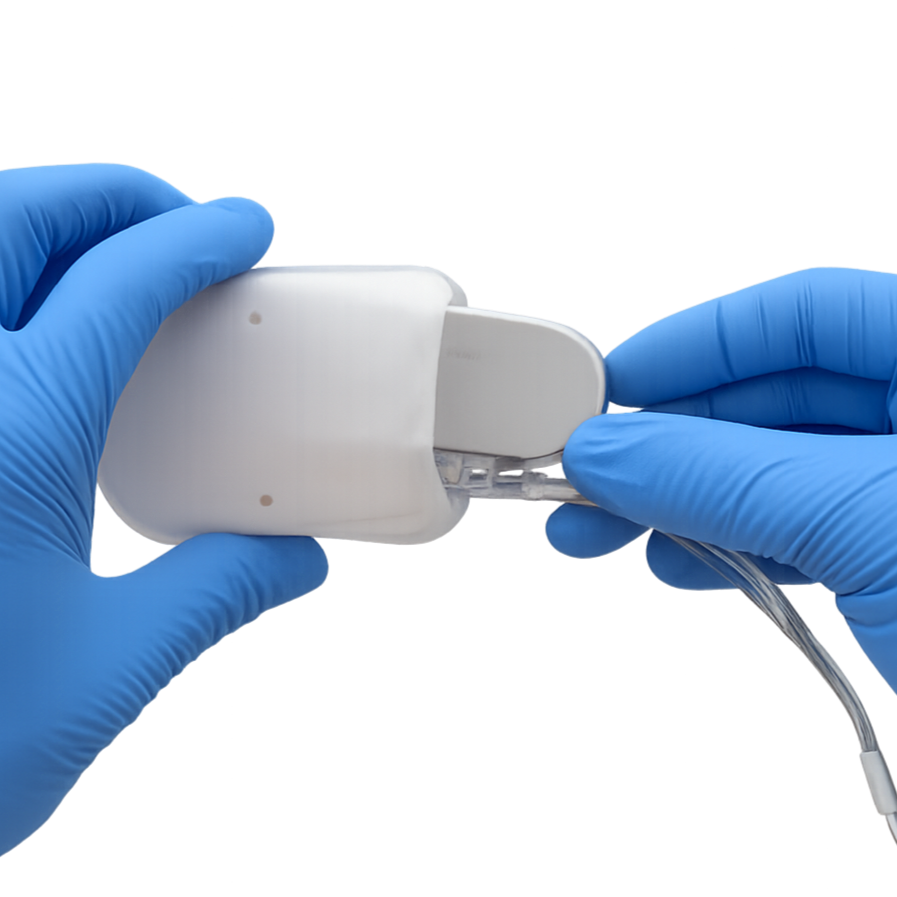
Electrospun fibers, matched in diameter and pore size to native ECM, are associated with stem cell adherence resulting in healthier tissue ingrowth, better revascularization, less scar tissue and prevention of migration as the scaffold resorbs.
Infection Protection Layer
Targets prolonged local activity at the implant surface due to synchronized release of two potent antibiotics with no resistance formation of superbugs.
Ready to use
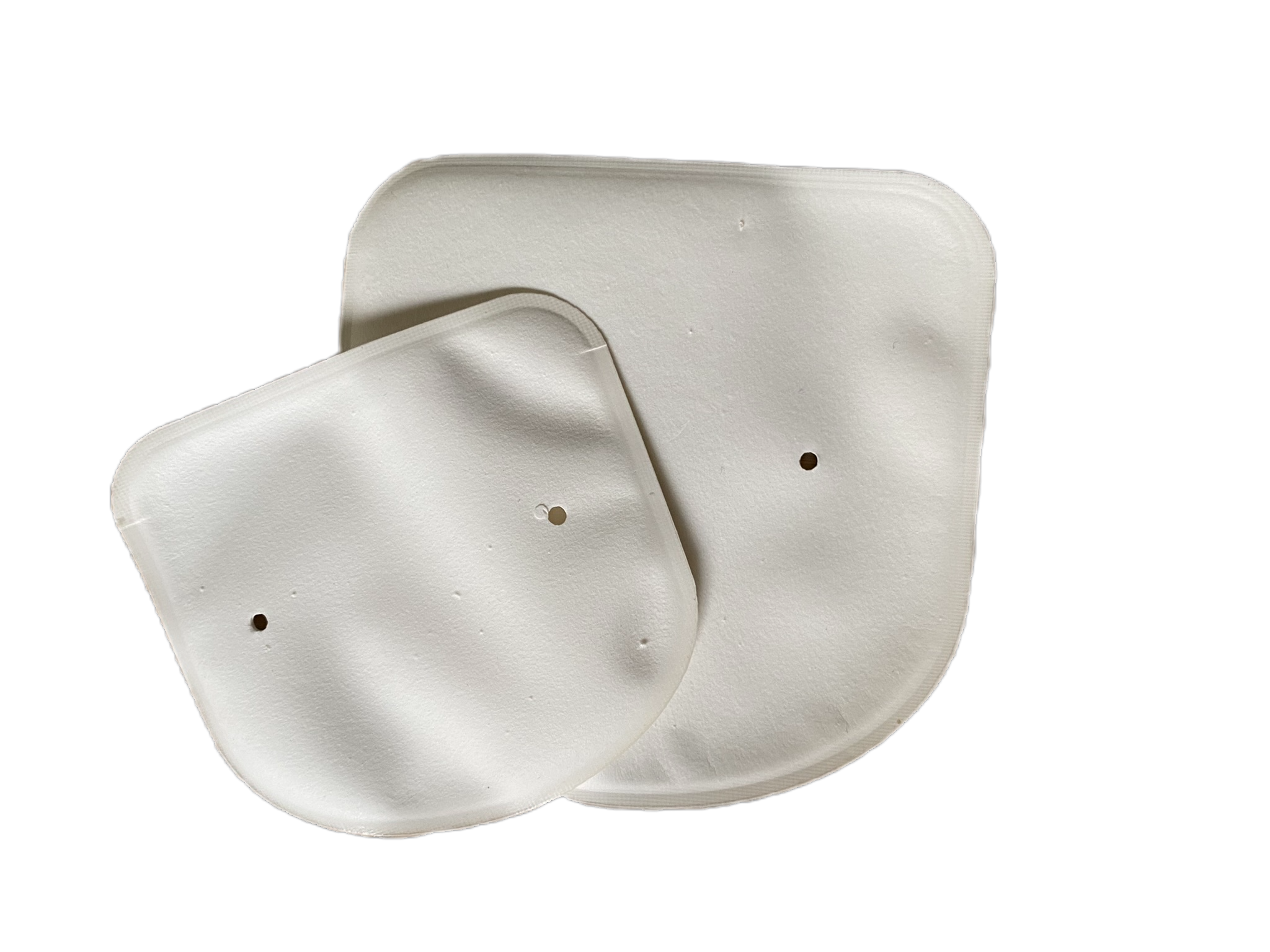
Other envelopes typically require a multi-step technique for implantation, including 1–2 minutes of hydration before the device can even be placed. The Amynas envelope is soft and silky to the touch and ready to use, no soak step, no added OR time.
Built to regenerate
Electrospinning creates an open, interconnected fiber network that closely mimics the body's own extracellular matrix (ECM). Collagen-sheet materials such as porcine small intestinal submucosa (SIS) — used in competing envelopes — are processed sheets that don't share that three-dimensional, fiber-scale architecture.
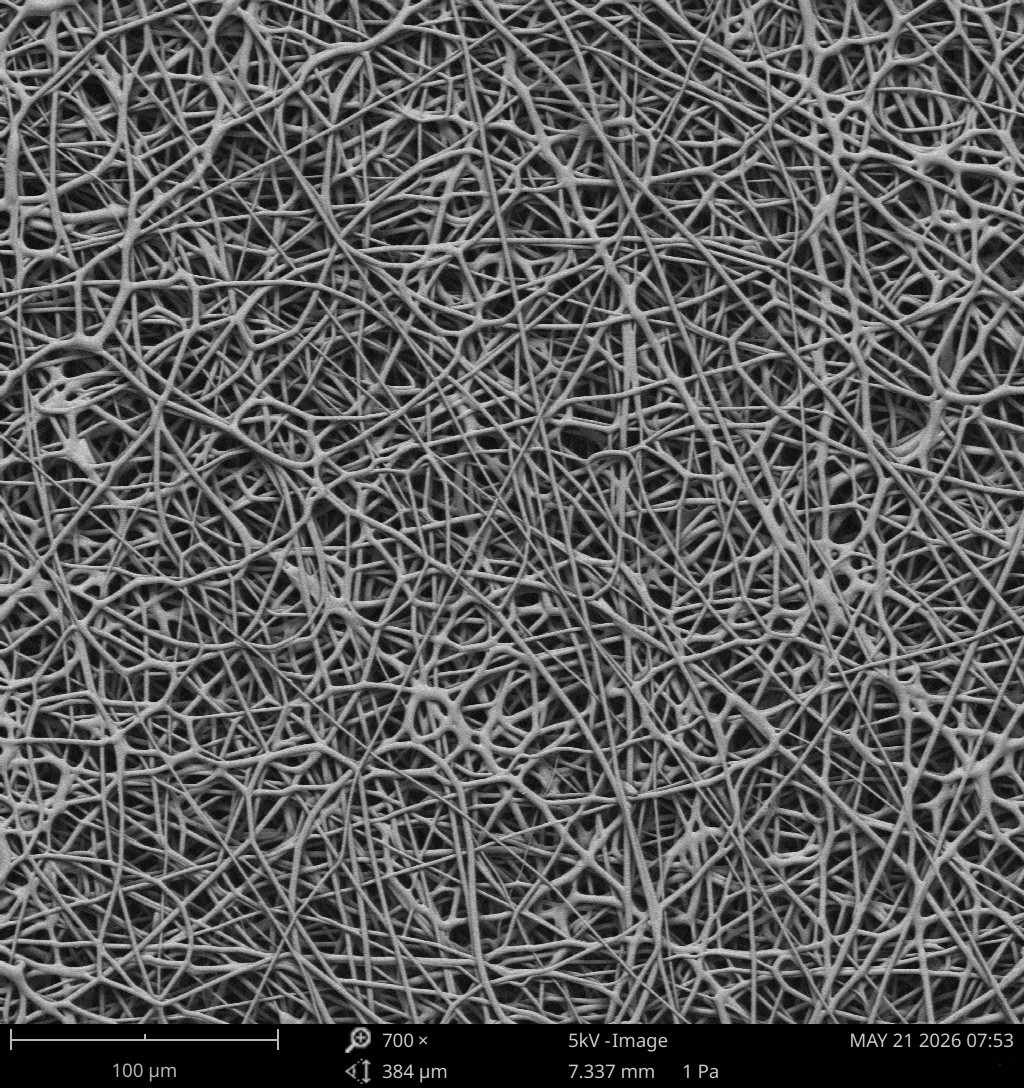
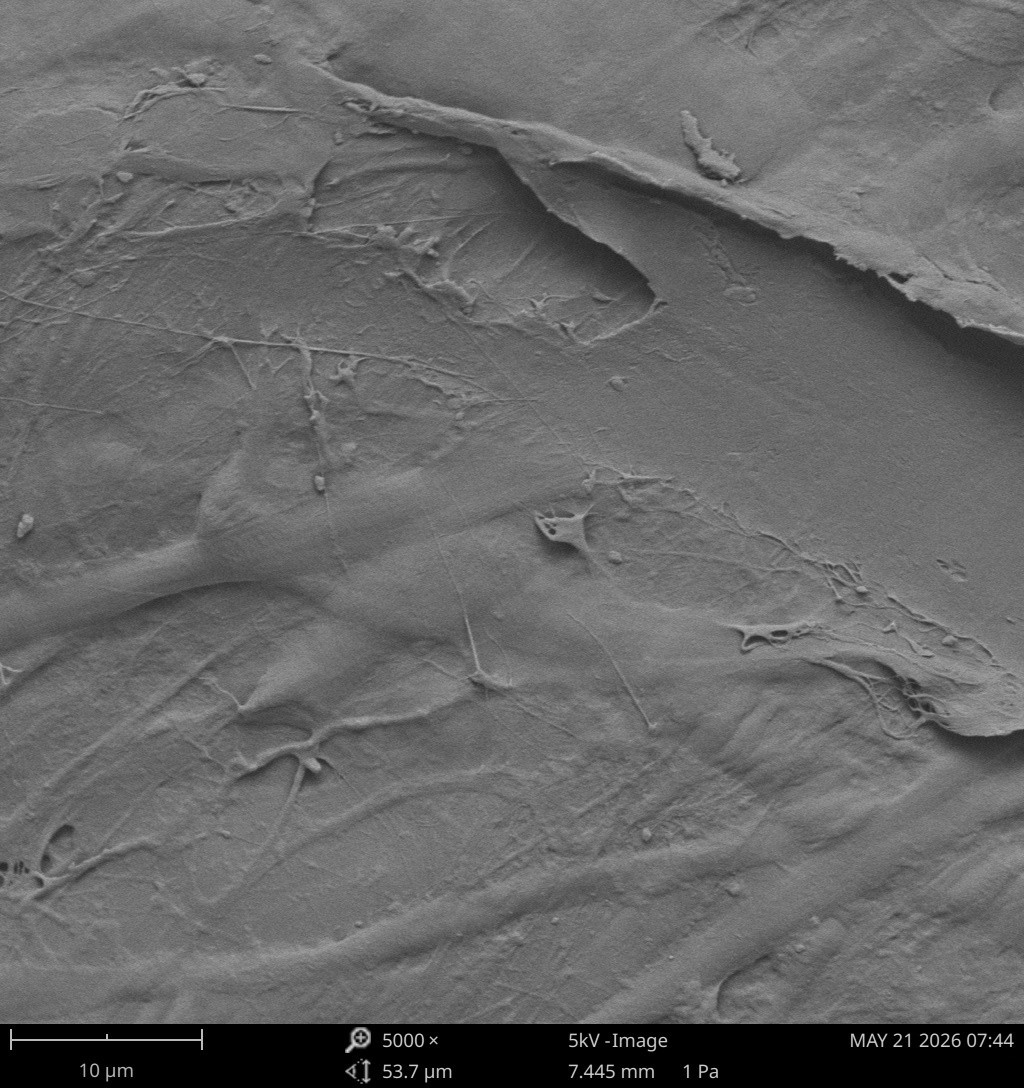
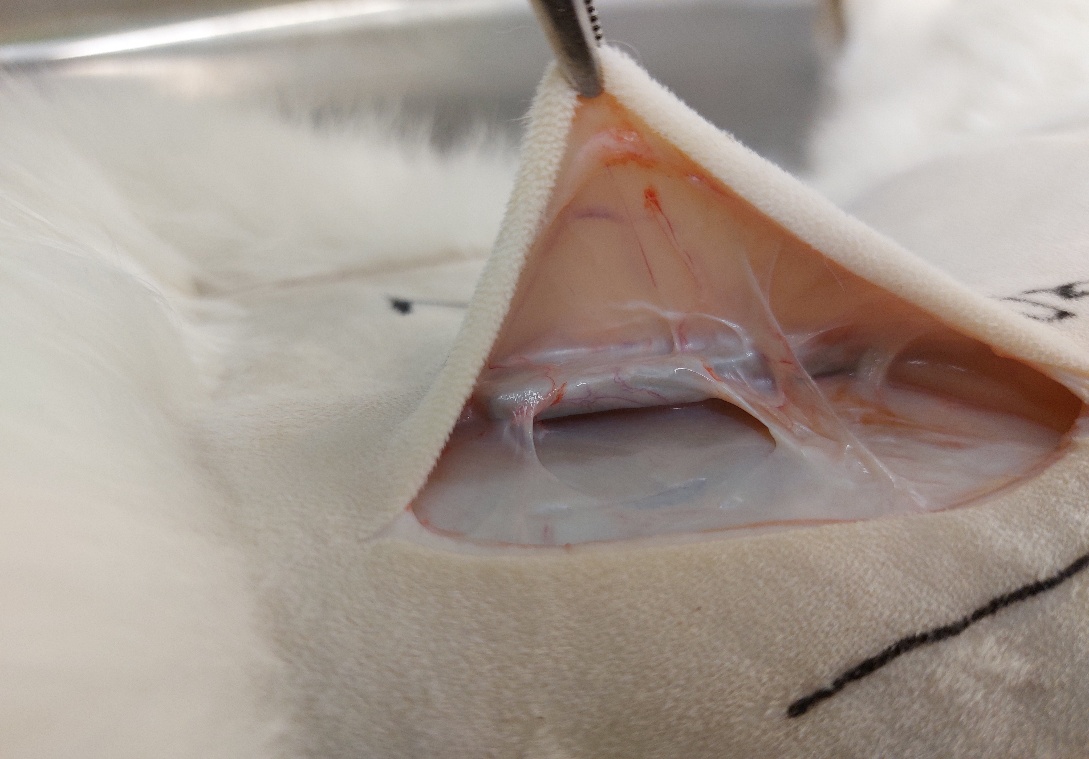
Tissue response follows architecture. Independent research on macroporous electrospun structures — matched in fiber diameter and pore size to native ECM — has shown this physical architecture is associated with macrophages shifting toward a pro-regenerative (M2) phenotype, lower pro-inflammatory cytokine expression, and less fibrotic scarring at the implant interface.10 The Amynas envelope is electrospun to that same fiber-scale architecture, engineered to assist in the healing of the CIED/NSD device pocket.
Long-term broad-spectrum antibacterial efficacy, without the resistance trade-off
The two antibiotics are released simultaneously over a 14–21 day window11 — longer than the market leader's release profile. This simultaneous release ensures protection during the most crucial weeks after surgery. Importantly, bacteria are not exposed to a single sub-therapeutic drug concentration at any given time, which is a known driver of antimicrobial resistance (AMR).
In vitro efficacy testing against a panel of six clinically relevant organisms, over 7 days, showed the Amynas envelope remained effective through the full window — including MRSA, where the market-leading envelope does not.
In vitro efficacy testing, 7 days, as required by FDA.11
Localized protection
Therapeutic payload released exactly at the implant surface, not diluted through systemic circulation.
Conforms to any implant
A soft, flexible mesh, not a rigid coating — fits pacemakers, joints, grafts, and neurostimulators alike.
Fully Biodegradable
Resorbed after 6 months, ensuring CIED/NSD device is stabilized and integrated in the body.
Engineered to re-grow healthy tissue
The nanofiber scaffold physically looks like the body's own ECM, encouraging vascularized tissue integration instead of dense scar capsule formation.
Leadership
From concept to commercial.
We've done it before.

Lode Debrabandere, PharmD, PhD, MBA
Co-Founder & Chief Executive Officer
25+ years in life sciences leadership, including CEO roles at Aziyo Biologics and Osiris Therapeutics (acquired by Smith & Nephew for $660M) and senior commercial leadership roles at Bristol Myers Squibb and UCB Pharma.

Stefan Verheye, MD, PhD
Co-Founder & Chief Medical Officer
Distinguished interventional cardiologist and Clinical Professor of Interventional Cardiology at Vrije Universiteit Brussel, with deep clinical research and device-development experience.

Frank Czworka
Chief Commercial & Business Officer
25+ years scaling commercial organizations across vaccines, biologics, and specialty therapeutics; leads commercial strategy, market access, and strategic partnerships at Amynas.

Scott Heuler
Chief Innovation and Growth Officer
25+ years in medical device commercial leadership, including senior sales and marketing roles at Boston Scientific, Guidant, and NeuroOne Medical Technologies.

Jed Johnson, PhD
Chief Technology Officer
Co-founded an electrospinning CDMO and has led development and regulatory clearance of multiple pioneering electrospun medical devices; PhD in Materials Science and Engineering, Ohio State University.

John Thomas, CPA
Chief Financial Officer
40+ years in financial management, accounting, and corporate governance across life sciences and healthcare, including CFO roles at numerous public and private biotech and medtech companies; CPA, University of Virginia.

Freya Cools, PharmD, PhD
Director, Research & Development
Leads R&D, product development, regulatory affairs, and quality management at Amynas, with particular expertise in FDA regulatory strategy for combination products; PharmD and PhD in Microbiology, University of Antwerp.
For Investors
A capital-efficient path
to a large, underserved market.
TAM for antibacterial envelopes = $8.4B
SOM for antibacterial envelopes = $2.3B
Business Model
Staged platform expansion
proof market
adjacency
platform scale
Full market-sizing methodology, sensitivity assumptions, and competitive positioning are available to qualified investors on request — get in touch.
Contact
Let's talk.
Investor, partnership, or press inquiry — reach out and we'll follow up directly.
Amynas, Inc.11 eWall Street, Suite 258
Mount Pleasant, South Carolina 29464, US info@amynas.com
Sources
- Centers for Medicare & Medicaid Services. Hospital-Acquired Condition (HAC) Reduction Program: FY 2026 Fact Sheet [Internet]. Baltimore (MD): CMS; 2025 [cited 2026 Aug 7]. Available from: cms.gov
- Healthcare Surfaces Institute. Healthcare-Associated Infections Statistics [Internet]. [cited 2026 Aug 7]. Available from: healthcaresurfacesinstitute.org
- U.S. Department of Health and Human Services. HAI National Action Plan [Internet]. Washington (DC): HHS [cited 2026 Aug 7]. Available from: hhs.gov
- Centers for Disease Control and Prevention. National and State Healthcare-Associated Infections Progress Report [Internet]. Atlanta (GA): CDC [cited 2026 Aug 7]. Available from: cdc.gov
- Chea N, et al. Health care–associated infections in U.S. hospitals, 2023 versus 2015. N Engl J Med. 2026;395(3):255–266.
- Blomström-Lundqvist C, et al. European Heart Rhythm Association (EHRA) international consensus document on how to prevent, diagnose, and treat cardiac implantable electronic device infections. Eur Heart J. 2020;41(21):2012–2032.
- Wilkoff BL, et al. Cost-effectiveness of an antibacterial envelope for cardiac implantable electronic device infection prevention in the US healthcare system from the WRAP-IT trial. Circ Arrhythm Electrophysiol. 2020;13(10):e008503.
- Caldara M, Belgiovine C, Secchi E, Rusconi R. Environmental, microbiological, and immunological features of bacterial biofilms associated with implanted medical devices. Clin Microbiol Rev. 2022;35(2):e00221-20.
- Krahn AD, et al. Prevention of Arrhythmia Device Infection Trial: the PADIT trial. J Am Coll Cardiol. 2018;72(24):3098–3109.
- Sarhane KA, et al. Macroporous nanofiber wraps promote axonal regeneration and functional recovery in nerve repair by limiting fibrosis. Acta Biomater. 2019;88:332–345.
- Data on file, Amynas Inc.